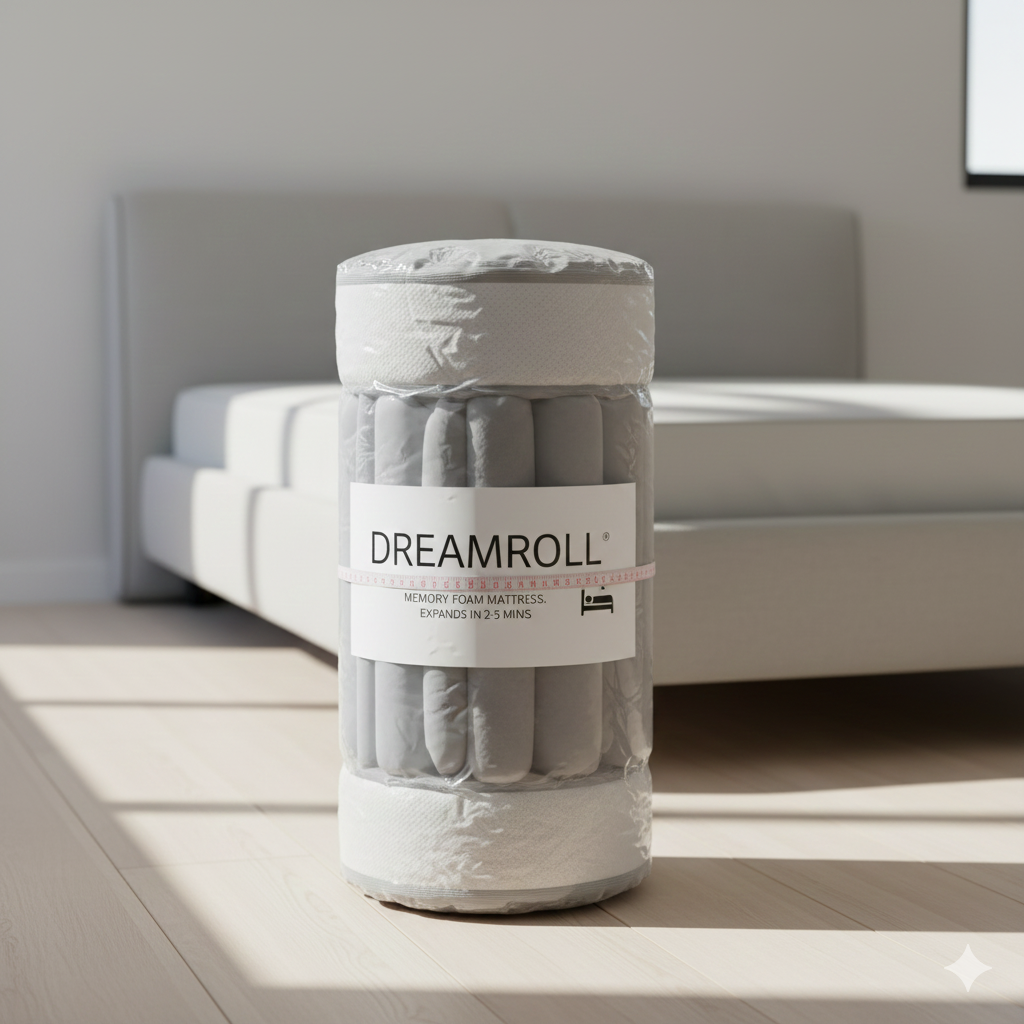
Mattress Export Problems Usually Start After the Factory, Not Inside It
Most mattress exporters focus on product specs: foam density, spring count, fabric composition.
Those matter—but they are rarely what break an export project.
What actually breaks mattress exports is volume miscalculation.
A mattress that looks profitable on paper becomes unworkable once freight is added.
A container that was supposed to carry 120 units fits 78.
Warehousing costs exceed forecasts within weeks.
Last-mile delivery charges erase margins completely.
This is the point where importers start looking for a vacuum packed mattress exporter, not to “optimize”, but to fix a cost structure that no longer scales.
How Much Volume Vacuum Packing Really Saves (And When It Doesn’t)
Vacuum packing is often marketed as “saving space”.
That statement is incomplete.
What matters is how much space is saved relative to mattress structure.
Based on real export configurations:
-
All-foam mattresses (memory foam / HR foam)
Typical volume reduction: 55–65% -
Hybrid mattresses (foam + pocket spring)
Typical volume reduction: 35–45% -
Traditional innerspring without foam dominance
Compression effect: limited and often unstable
This difference explains why some importers report dramatic freight savings, while others see only marginal improvement—or worse, post-delivery complaints.
A capable exporter does not promise universal compression.
They evaluate structure first, packaging second.
Container Utilization: The Number Most Importers Miscalculate
Export cost is not driven by unit price.
It is driven by units per container.
Here is a realistic comparison based on 40HQ loading:
| Mattress Type | Flat Packed | Vacuum Packed |
|---|---|---|
| Foam mattress (queen) | ~90 units | 150–170 units |
| Hybrid mattress | ~70 units | 100–115 units |
| Traditional spring | ~65 units | 70–80 units |
The implication is simple:
-
Vacuum packing makes sense only when it increases container density enough to offset compression cost
-
Exporters who cannot model this accurately are guessing, not planning
A professional vacuum packed mattress exporter should be able to calculate this before you confirm an order.
Recovery Is the Real Risk—Not Compression Itself
The biggest fear among buyers is not compression.
It is incomplete recovery after unpacking.
This risk depends on three factors exporters rarely explain clearly:
-
Foam resilience and cell structure
Low-density foam recovers slower and less consistently. -
Compression duration
A mattress compressed for 30 days behaves very differently from one compressed for 120 days. -
Vacuum film quality
Single-layer films increase air leakage risk during long transit.
Experienced exporters define maximum safe compression windows.
In practice, many foam mattresses should not remain vacuum packed beyond 60–90 days, depending on material behavior.
Exporters who cannot specify this range are not managing risk—they are transferring it to you.
When Vacuum Packed Mattress Export Fails (And Why It Still Happens)
Vacuum packing fails in predictable scenarios:
-
Over-compressing hybrid mattresses to chase container numbers
-
Ignoring long port delays or inland storage time
-
Using generic packaging films to reduce material cost
-
Treating all mattress SKUs as equally compressible
When failure happens, the cost is not a return.
It is brand damage, customer distrust, and platform penalties—especially in e-commerce.
This is why choosing a vacuum packed mattress exporter is a technical decision, not a sourcing shortcut.
What a Serious Exporter Should Provide Before You Commit
Before confirming production, a qualified exporter should provide:
-
Compression ratio by SKU, not generic claims
-
Recovery test results after simulated shipping duration
-
Container loading plan with unit counts
-
Defined maximum compression time
-
Clear unpacking and recovery instructions for end users
These are not “extra services”.
They are the baseline for exporting compressed mattresses responsibly.
Standards and Testing: Why They Matter More in Vacuum Packing
Compression introduces mechanical stress.
This is where reference frameworks from ISO and ASTM become relevant—not as marketing badges, but as testing logic.
Standards related to material fatigue, packaging durability, and load behavior help exporters validate whether a compressed mattress can survive real shipping conditions, not just factory tests.
Exporters who reference such standards usually invest more in process verification, which directly reduces post-delivery disputes.
Choosing a Vacuum Packed Mattress Exporter Is a Cost Control Decision
Vacuum packing does not automatically reduce cost.
It restructures cost.
When done correctly, it enables:
-
Predictable freight planning
-
Scalable container utilization
-
Lower warehouse pressure
-
More stable last-mile delivery economics
When done poorly, it creates hidden risk that surfaces only after arrival.
If your goal is sustainable export—not short-term price advantage—then working with an experienced vacuum packed mattress exporter becomes a strategic choice.
You can review applicable mattress configurations on our Products page or discuss compression feasibility for your target markets through Contact Us.